
Great “Specimen” Trees: The Japanese Maple Tree
A “specimen” tree is defined as a tree chosen as a point of focus in a landscape. It usually has an unusual shape, texture, color or other feature that distinguishes it from other trees and shrubs in your landscape.
Specimen trees are a captivating addition to any landscape, offering a unique blend of beauty, function, and environmental benefits. These trees are chosen for their distinct characteristics, such as striking foliage, impressive blooms, or an unusual shape, making them focal points in gardens, parks, and urban environments. Here are several compelling reasons why you should consider incorporating specimen trees into your landscape design.
Aesthetic Appeal
Specimen trees are the epitome of natural beauty, bringing a dramatic flair to any setting. Their standout features, whether it’s the brilliant autumn hues of a Japanese Maple turning a rich deep red, the elegant weeping form of a Weeping Willow, or the striking bark of a River Birch, draw the eye and create visual interest year-round. Weeping Japanese maples, with their cascading forms, can create a mound of stems and are suitable for shrub beds, foundation plantings, planters, pots, around a pond, on banks, and at the top of walls. These trees can serve as living sculptures, enhancing the overall design of your landscape with their unique forms and textures. By strategically placing specimen trees, you can create a dynamic and captivating focal point that anchors the surrounding garden elements.


Environmental Benefits
Beyond their aesthetic value, specimen trees play a crucial role in supporting local ecosystems. They provide habitat and food for wildlife, from birds and insects to small mammals. For instance, the Oak tree supports a diverse range of wildlife, offering acorns for animals and leaves for caterpillars, which in turn feed birds. Trees also improve air quality by absorbing pollutants and releasing oxygen. Additionally, they help mitigate urban heat island effects by providing shade and cooling the air through transpiration. Planting a specimen tree can thus contribute significantly to the ecological health of your area.
Increased Property Value
A well-placed specimen tree can significantly enhance the value of your property. Mature, healthy trees are often seen as indicators of a well-cared-for property and can boost curb appeal. According to various studies, properties with beautiful trees can see an increase in value by as much as 20%. A thoughtfully chosen specimen tree can thus be a wise investment, providing both immediate enjoyment and long-term financial benefits.
Educational Opportunities
Specimen trees offer unique educational opportunities for both children and adults. They can serve as living classrooms, teaching us about botany, ecology, and the natural world. For children, watching a tree grow and change with the seasons can foster a lifelong appreciation for nature. For adults, the care and cultivation of a specimen tree can be a rewarding hobby, providing a sense of accomplishment and a deeper connection to the environment.
Personal and Community Well-being
Trees have been shown to have a positive impact on mental and physical health. Spending time around trees and green spaces can reduce stress, improve mood, and enhance overall well-being. Specimen trees, with their striking beauty, can enhance these effects, providing a tranquil and inspiring space for reflection and relaxation. Additionally, in community settings, these trees can foster a sense of pride and unity, as residents come together to appreciate and care for their shared environment.
Selecting and Caring for Specimen Trees
When selecting a specimen tree, it’s important to consider factors such as climate, soil conditions, and the tree’s growth habits. For example, Japanese maples thrive in partial shade and partial sun, making them ideal for locations with a balance of sunlight and shade. In warmer regions, providing afternoon shade is crucial to prevent leaf damage. Additionally, Japanese maples can be grown under deciduous trees, which offer the perfect amount of filtered light. Consulting with the professionals at Big Trees Inc. can help ensure you choose a tree that will thrive in your specific environment. Once planted, proper care is essential to maintain the health and beauty of your specimen tree. This includes regular watering, mulching, pruning, and monitoring for pests and diseases.
In conclusion, specimen trees are more than just plants; they are living works of art that enrich our lives and landscapes in numerous ways. Whether you are looking to enhance the beauty of your garden, support local wildlife, increase your property value, or simply create a peaceful retreat, a specimen tree can be a perfect addition. Embrace the timeless allure and multifaceted benefits of specimen trees, and transform your outdoor space into a vibrant, living masterpiece.
Most Popular Specimen Trees
Here are 4 great specimen trees that could provide the perfect focus of attention in your yard.
 Japanese Maple Trees

Japanese maples are top selections for specimen trees that can provide a striking focal point in your landscape. They are generally grown for their attractive foliage and shape. Mature trees are up to 25’ tall and 25’ wide. There are hundreds of Japanese maple varieties that come in various sizes with a large assortment of leaf shapes and colors. The leaves are typically red or green in the spring and summer, and then fade before their fall color explodes to bright red, yellow or orange. Add some up lighting down below to really accentuate the branch structure at night. The unique bark of Japanese maples also provides winter interest, making them visually appealing throughout the year. The Japanese red maple is a wonderful tree with significant cultural importance and is often used in bonsai art. Japanese maples offer year-round interest with their vibrant foliage colors and unique growth habits.
Acer Palmatum Dissectum
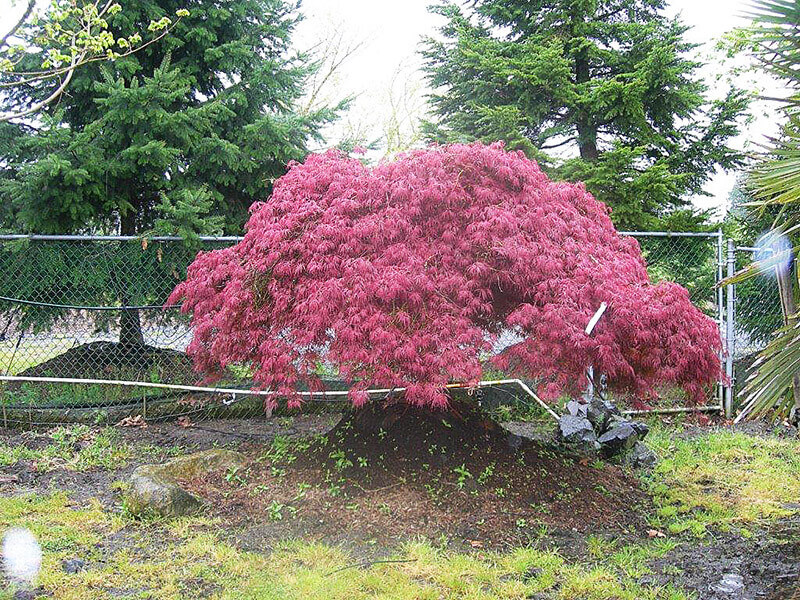
This round, mound-forming, deciduous Japanese maple has many qualities that make it an excellent garden plant, including a sculptural form, deeply cut foliage, arching shoots, and orange to bright red autumn color. Often, the branch structure can be stunning – making it a beautiful tree even in the winter.
Korean Dogwood
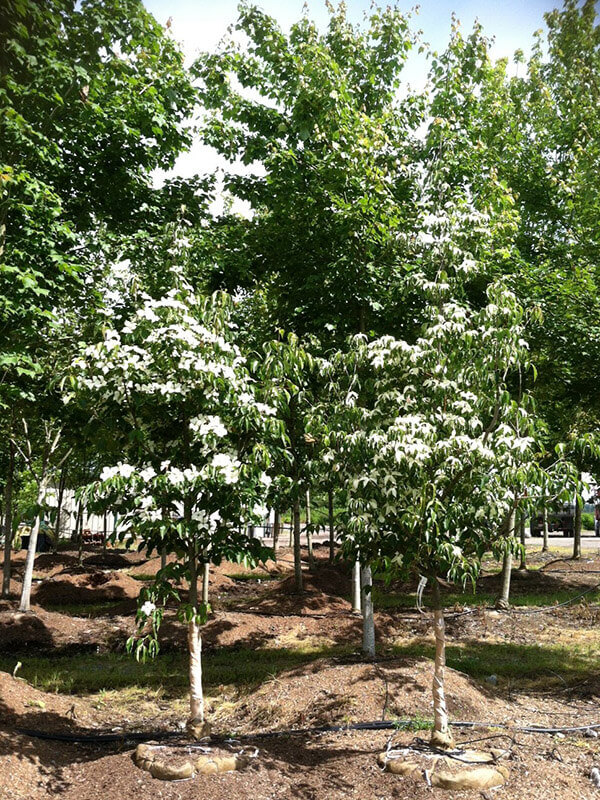
Cornus kousa, commonly called Kousa dogwood, is a small, deciduous flowering tree or multi-stemmed shrub that typically grows 15-30’ tall, with a vase-shaped habit in the early years but eventually maturing to a more rounded form. Bloom occurs in late spring or early summer. The showy parts of the Kousa dogwood “flower” (3-5” across) are the four narrowly pointed petal-like white bracts which surround the center cluster of insignificant, yellowish-green, true flowers. Varieties have either pink or off-white flowers.
Florida Rubra Dogwood
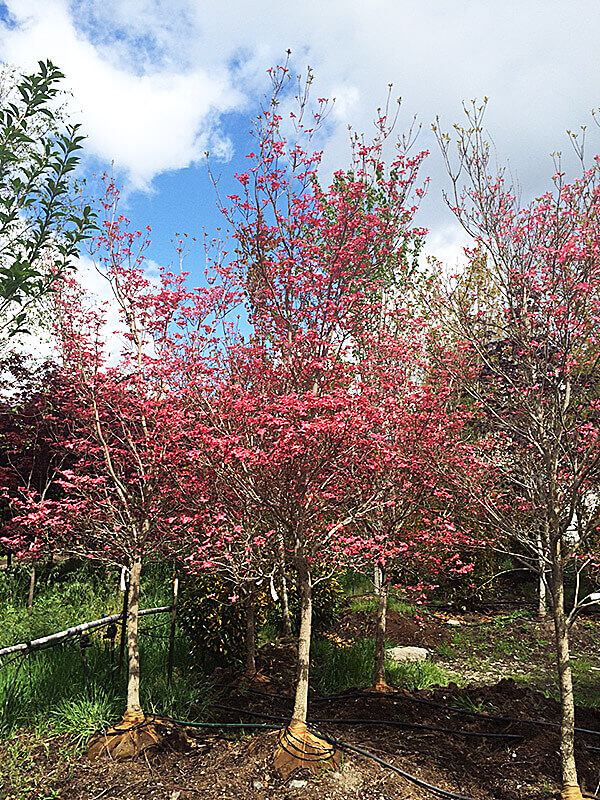
Cornus florida, commonly known as flowering dogwood, is a small deciduous tree that typically grows 15-30’ tall with a low-branching, broadly-pyramidal but somewhat flat-topped habit. It arguably may be the most beautiful of the native American flowering trees. It is native from Maine to southern Ontario to Illinois to Kansas south to Florida, Texas and Mexico. It is the state tree of Missouri and Virginia. It blooms in early spring (April) shortly after, but usually overlapping, the bloom period of the redbuds.
Contact Us Today
We have the trees that work best in the northwest, and we service the entire Seattle area. And you don’t need an appointment to come in. Come any time, to 10928 Springhetti Road, Snohomish, WA 98296.
For more information on getting deciduous trees for your home, call us now at 360-563-2700, or fill out the form to the right, and we will contact you right away.